Suicide: The Tunnel Visioned Effort to Stop Emotional Pain

Written by Chelsea D. Bryant, MSc, LPC, NCC, C-PD
Licensed Professional Counselor (TX) & Founder of Better Day Collective, PLLC
September is widely recognized as Suicide Prevention Month. During this time, we often focus on advocacy, awareness campaigns, and prevention efforts. These conversations are important. But I sometimes wonder if we spend enough time talking about the pathology that often precedes the need for prevention in the first place.
In my years of responding to mental health crises and behavioral health emergencies, one theme has consistently emerged: emotional pain. Time and time again, I have found emotional pain to be at the root of suicidal behavior. While there are important clinical distinctions between suicide attempts, parasuicidal behaviors, and non-suicidal self-injury, they often share a common denominator—the overwhelming desire to escape emotional suffering.
At its core, suicide is rarely about wanting to die. More often, it is a tunnel-visioned effort to stop emotional pain.
When emotional pain becomes intense enough, a person's perspective can narrow. The ability to envision alternatives, solutions, or hope can become obscured by the immediate need for relief. In those moments, the pain becomes louder than possibility.
I have dedicated a large portion of my career—as a licensed mental health provider and founder of Better Day Collective, PLLC—to targeting emotional pain, assessing risk, and providing treatment to those who are suffering. Through that work, I've come to appreciate a simple but powerful truth: emotional pain is one of the most human experiences we have.
Yet, when someone's emotional pain exceeds their personal threshold, society often responds with labels. We call people "unstable," "crazy," or "mentally ill." We distance ourselves from their experience, as though their suffering is fundamentally different from our own.
What we fail to remember is that the threshold for emotional pain is deeply individualized. It is shaped by life experiences, relationships, trauma, loss, biology, resilience, support systems, and countless other variables. That threshold is not determined by our opinion of someone else's experience. It is determined by the person living it.
Pain is not a competition. Suffering is not measured by public consensus.
The event that devastates one person may not affect another in the same way. Neither response is wrong. Both are human.
Perhaps one of the greatest shortcomings in our approach to suicide prevention is our tendency to focus exclusively on stopping the behavior without fully understanding the pain driving it. Prevention matters. Intervention matters. Treatment matters. But so does compassion. So does curiosity. So does creating space for people to speak honestly about what hurts.
This September, when people ask what we did for Suicide Prevention Month, my answer is simple.
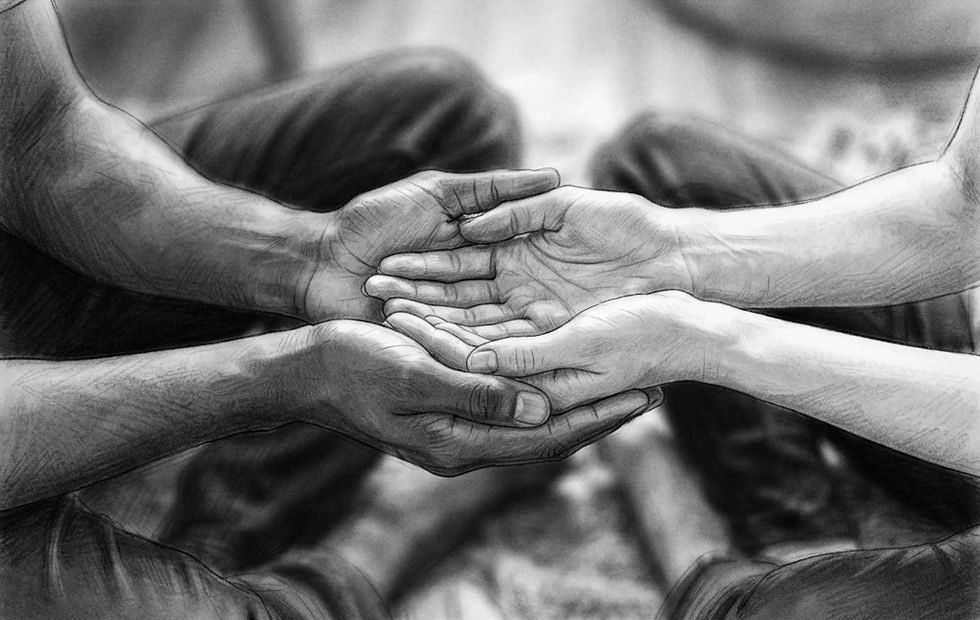
We held space.
We held space for emotional pain. We held space for individual thresholds. We held space for the people whose suffering was visible and for those whose suffering remained hidden. We chose to listen rather than judge. To understand rather than label.
Sometimes prevention begins long before a crisis. Sometimes it begins with acknowledging another person's pain and reminding them that they do not have to carry it alone.
And sometimes, the most powerful thing we can do is simply make room for someone's humanity.
If you or someone you know is experiencing suicidal thoughts or actions, please contact 911 or 988.